
Contours of Europe: Challenges and Opportunities in Spatial Dimensions
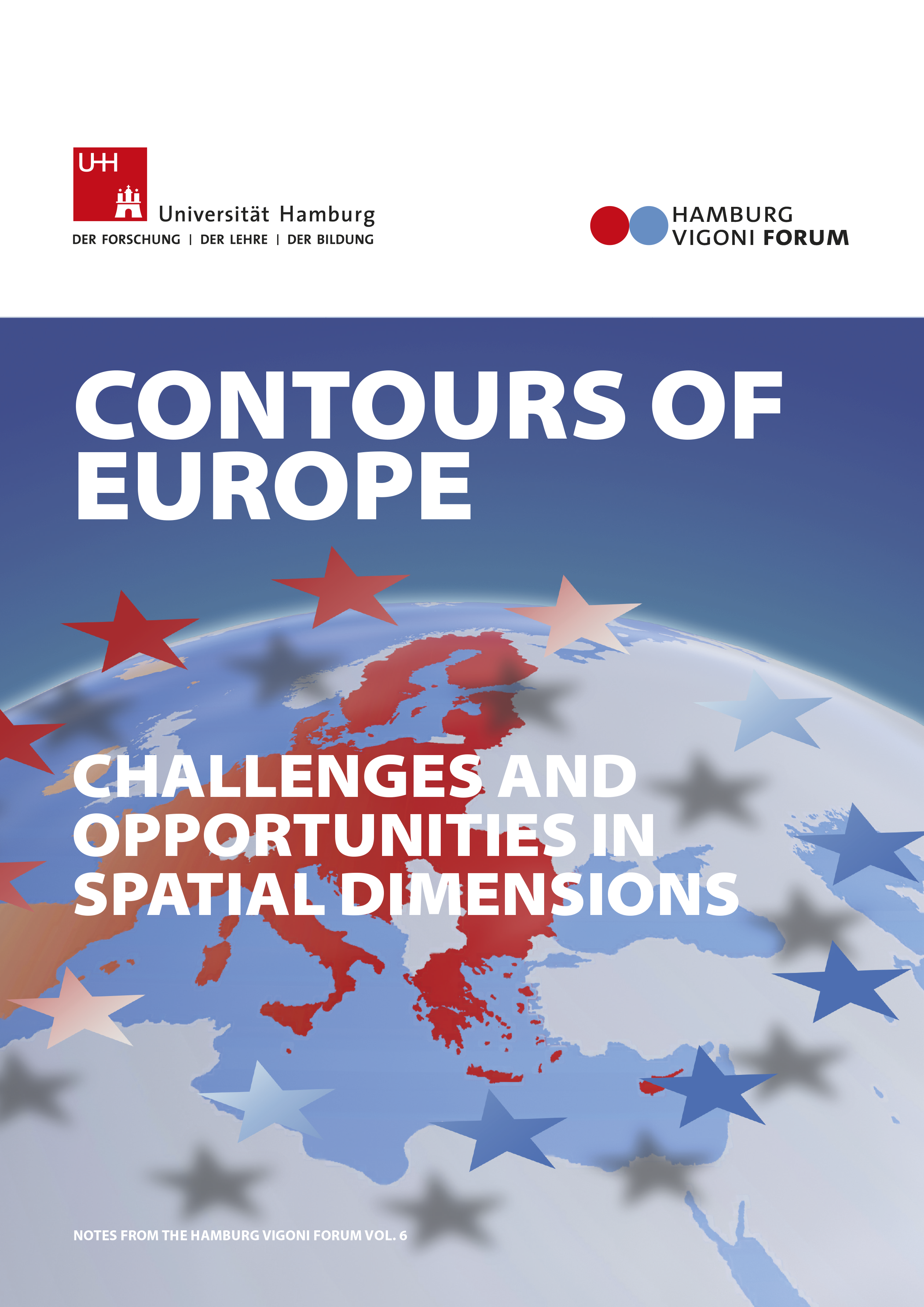
The brochure “Contours of Europe: Challenges and Opportunities in Spatial Dimensions” offers a multifaceted exploration of what it means to understand Europe through the lens of “space” – a concept that is simultaneously legal, political, philosophical, and geopolitical. Bringing together scholars from diverse disciplines, the brochure investigates how Europe’s spatial dimension has been constructed, challenged, and reimagined in a time of profound transformation.
At the heart of this reflection lies a guiding question: what holds Europe together? The contributions assembled here approach this question from complementary angles. Several essays trace the intellectual and legal genealogies of Europe as a space shaped by norms rather than force, showing how sovereignty, legitimacy, and the rule of law have long provided the framework for cooperation among European states. These analyses highlight the tension between Europe’s self-understanding as a “legal space” and the pressures of an increasingly adversarial global environment.
The brochure also illuminates how freedom of movement has become one of the most tangible expressions of Europe’s spatial openness. Yet this achievement faces mounting challenges – from the reintroduction of internal border controls to the pressures at the EU’s external frontiers and the structural fragilities revealed by recent crises. The legal reflections collected here underscore the delicate balance required to preserve a space grounded in mobility, trust, and shared values.
Expanding the conceptual map further, a critical-feminist perspective exposes the often invisible borders that shape daily life across the continent. These contributions reveal how inequalities linked to gender, class, ethnicity profoundly affect Europe’s cohesion and security. By integrating these dimensions into the broader reflection on space, the brochure challenges traditional narratives and calls for a more inclusive and realistic understanding of European integration.
Finally, several essays analyse Europe’s changing position in a world marked by the return of geopolitics. Russia’s war of aggression, shifting U.S. commitments, and the emergence of a more competitive global order place Europe before urgent questions of agency, security, and strategic responsibility. These reflections consider how Europe might navigate this landscape without abandoning the normative foundations that distinguish its model of integration.
Taken together, the contributions in this brochure show that Europe’s “contours” are not fixed lines but evolving boundaries – legal, social, and geopolitical. Understanding Europe as a space means recognising both its fragility and its potential: a space shaped by law, animated by movement, contested by power, and continually renegotiated through political imagination. This brochure aims to offer readers not only analytical insights, but also a deeper awareness of the opportunities and challenges that will shape Europe’s future in the years to come. The sixth volume of the “Notes from the Hamburg-Vigoni Forum” publication series distills the insights garnered from the workshop, which convened at Villa Vigoni in February 2025.
“Contours of Europe: Challenges and Opportunities in Spatial Dimensions” (PDF)